

 Go Back
Knowing what to do in a dental emergency can mean the difference between saving and losing a tooth. If you are ever in doubt, call Dental 359 immediately on 1300 625 625 — our team will guide you through the right steps.
Quick Tips for Common Dental Emergencies
- Do not panic. Try to stay calm — clear thinking will help you act quickly and correctly.
- Knocked-out permanent tooth: Keep the tooth moist at all times. If possible, place it gently back into the socket without touching the root. If that’s not possible, place it between your cheek and gums, or in a glass of milk. Call us immediately on 1300 625 625. If the tooth is reattached within an hour of falling out, there is a much better chance of saving it.
- Chipped or cracked tooth: Rinse the mouth with warm water to clean the area. Apply cold compresses to the face to keep any swelling down. Try to keep the broken fragment — bring it with you to your appointment.
- Bleeding: Apply a moistened gauze square to the affected area and hold firm, gentle pressure for about 10 minutes or until the bleeding stops. If bleeding persists after 20 minutes, contact a dentist immediately.
- Toothache: Rinse the mouth with warm water and gently use dental floss to remove any food caught between the teeth. Do not put aspirin on the aching tooth or gum tissue as this can burn the gum.
- Object stuck in the mouth: Try to gently remove with dental floss. Do not attempt to remove it with sharp or pointed instruments.
- Dislodged crown or filling: Try to slip the crown back into the original position, securing it with toothpaste. Do not attempt to reattach it with glue or any over-the-counter adhesive. Call us immediately.
- Lost filling: Temporarily fill the spot with sugarless gum and contact us immediately. Avoid chewing on the side of the mouth with the missing filling.
- Bitten tongue or lip: Clean the area gently with water and apply a cold compress.
Precautions to Avoid Dental Emergencies
- Wear a mouthguard when participating in contact sports or recreational activities.
- Avoid chewing ice, popcorn kernels and hard candy, which can crack your teeth.
- Use scissors — never your teeth — to cut things.
Frequently Asked Questions — Dental Hygiene
My gums bleed when I brush or floss — what does this mean?
Bleeding gums are a sign of inflammation caused by plaque, a sticky film containing bacteria that sits on the teeth and along the gum line. When teeth aren’t brushed adequately, the bacteria causes Gingivitis — inflammation of the gums. This includes swollen, puffy gums, redness, bleeding and can be painful. Gingivitis is reversible through good brushing twice a day and flossing once a day. If bleeding occurs when you floss, don’t be discouraged — this is a sign that you need to floss more, not less. After a short time, the bleeding will stop and your gums will become a lot healthier.
Manual vs. Electric Toothbrush
New studies have shown that electric toothbrushes clean teeth and gums better than manual toothbrushes. Scientists have found they achieve healthier gums and less tooth decay. The oscillating motion of an electric toothbrush allows the user to hold the brush lightly on the tooth and allow the brush to do the cleaning, rather than using a scrubbing motion. This helps minimise gum recession and wear on the teeth. Both Dr Golestani and our hygienist team recommend switching to an electric toothbrush — patients who make the switch not only have better oral health but love their new brush and wish they had made the switch years ago.
Can I whiten my teeth?
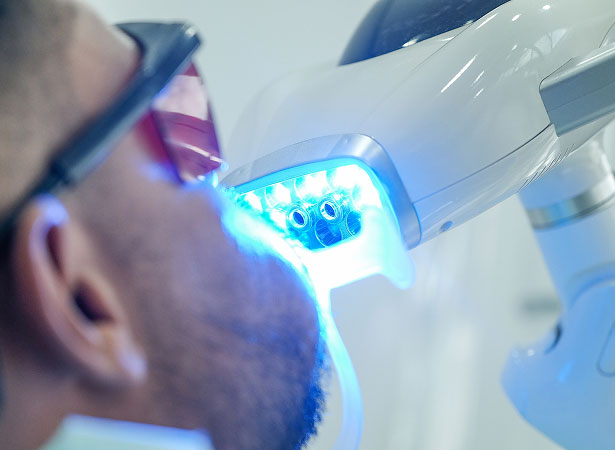
Whitening your teeth is a great option to improve your smile’s appearance and achieve a brighter look. Before your whitening appointment you will need to undergo an examination and a professional scale and clean. Unfortunately not all patients are suitable — those with anterior crowns or restorations, patients with active tooth decay or demineralisation, pregnant patients and children are generally not candidates. Ask Dr Golestani or our hygienist whether you are suitable for whitening at your next scale and clean appointment. If you are experiencing a dental emergency, please contact Dental 359 immediately on 1300 625 625.