


 Go Back
Restorative dentistry treatments have come a long way in recent decades. One of the biggest leaps forward was the introduction of All-On-4® dental implants, which reached Australian shores around 2005 and were pioneered in Perth by Dental 359.
If you’re at the age or stage where you’re considering dentures, you likely know what’s involved. You may have even worn them for years.
What you might be interested in learning about is the other option, and how the “All-On-4® implants vs. dentures” debate looks in your case.
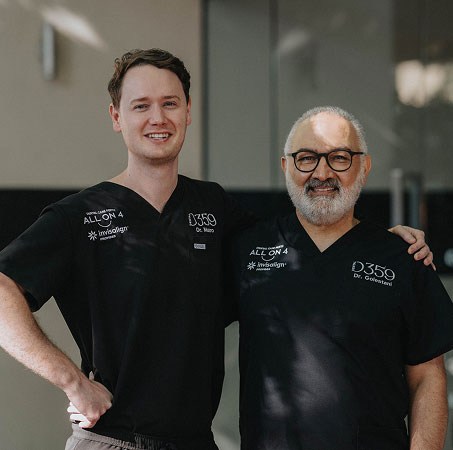
At Dental 359 in Subiaco, Dr Thomas Munro performs All-On-4® procedures for suitable patients. We don’t fit conventional dentures, but there are situations where dentures are more suitable. We’ll explain those in this guide.
Dr Munro will discuss what’s best in your case without bias or pressure, and help you with dentures if appropriate.
What Are Full Dentures?
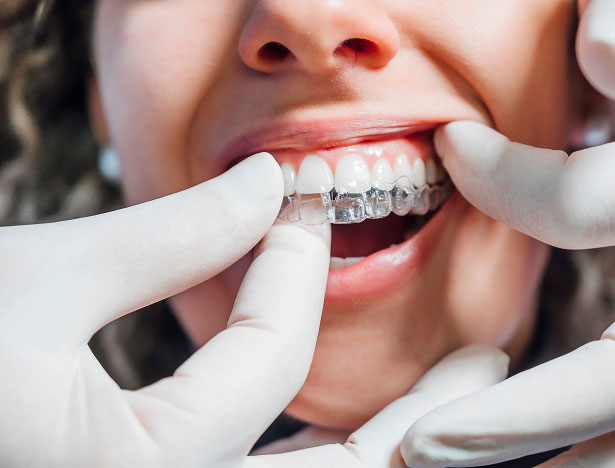
Full dentures are removable dental appliances made from artificial teeth on a gum-coloured base that’s shaped to your mouth. Dentures replace every tooth in the upper arch, the lower arch, or both.
Dentures stay in place through suction and the natural contours of your mouth, or sometimes using a denture adhesive.
Conventional dentures are removed for cleaning and left out overnight. They can make eating and speaking easier, and a well-fitting denture can be a practical long-term choice.
The key difference between All-On-4® vs. dentures is where the teeth are supported. Dentures are not anchored into the jawbone, so their fit may change as the gums and bone change. Dentures may rock or move when eating or speaking.
What Is All-On-4®?
All-On-4® is a full-arch implant technique developed by Nobel Biocare. It supports a complete set of fixed teeth on four dental implants in each jaw.
Your dentist places two implants upright towards the front of the arch, and two on an angle towards the back. That angled placement is designed to use available bone and often avoids bone grafting, depending on the amount and location of suitable bone.
You cannot remove the teeth fixed to the implants yourself, although a dentist can for maintenance or repair.
All-On-4® Implants Involve Surgery
Implant placement takes place under general or intravenous anaesthesia/sedation (local anaesthetic only without sedation pending patient health factors). After that comes a healing period of several months while the implants fuse with the jawbone, a process called “osseointegration”.
Your dentist may be able to place temporary teeth during healing, depending on your treatment plan. At Dental 359 our intention is to have a temporary set of teeth fixed to implants within 24 hours after surgery.
All-On-4® vs Removable Dentures: Side-by-Side Comparison
There are a few practical differences when comparing All-On-4® implants vs. dentures. We’ve summarised the main points below, but remember that individual circumstances vary. Dr Munro will advise on suitability at your consultation.
Factor |
All-On-4® implants |
Dentures |
Anchorage |
Fixed to four implants in the jawbone | Rests on the gum tissue |
Removability |
Fixed; only your dentist removes it | Taken out daily for cleaning and overnight |
Surgery required |
Yes, implant placement under local anaesthetic/sedation | No surgery, though tooth extraction may be necessary |
Healing period |
Around three to six months for osseointegration | Gums settle in weeks to months |
Bone preservation |
Reduces the rate of continued bone resorption | Higher resorption rates – significant boney changes over time |
Stability |
Doesn’t move when eating or speaking | Can shift; adhesive may help |
Cleaning |
Brushed in place, plus cleaning aids under the bridge | Removed and cleaned outside the mouth |
Long-term maintenance |
Regular reviews and teeth may need repair or replacement over time | Regular fit checks, relines and eventual replacement |
Dietary restrictions |
Soft diet while healing; minimal once fully healed. Improved chewing ability. | Harder or chewier foods can be difficult. Reduced chewing power. |
Cost |
Higher initial cost | Lower initial cost |
Suitability |
Needs enough bone and good health for surgery | Suits a wider range of patients |
Available at Dental 359 |
Yes | Yes |
Are Implants Better Than Dentures for Every Patient?
Neither is the clear “better” option. All-On-4® requires more upfront, mainly cost and surgery, in return for natural-looking teeth that stay in place. Dentures ask less at the start, with compromises that tend to show up later.
What All-On-4® Does Well
Anchored in the Jawbone
Four implants hold All-On-4® implants in the jawbone, so your teeth don’t move when you eat or speak. This is the biggest functional difference from conventional dentures. There’s no lifting or shifting when you bite into something, and no clicking mid-sentence.
Bone Preservation
All-On-4® implants distribute the force of chewing into the supporting jawbone, unlike dentures, which spread the force across the appliance itself. This force stimulates the jawbone, and clinical studies suggest implants reduce the rate of bone loss compared with traditional dentures.
Skip ahead to “The Bone Loss Question” to learn more.
No Denture Adhesive Needed
All-On-4® is held in place by the implants. Denture adhesive isn’t part of your routine. However, you still need to thoroughly clean around the implants and beneath the bridge.
Not Reliant On Changing Gum Contours
Dentures can become loose and need adjusting as the jaw’s contours change over time. All-On-4® draws support from implants, so retention is less dependent on gum contours.
In plain English, the fit doesn’t change if the gums underneath change shape.
However, the prostheses may still need adjustment, repair or replacement. Your dentist will keep an eye on this at your regular dental check-up.
What Dentures Do Well
For some people, dentures are still the better choice. Here’s where they come out ahead against innovative implant technology.
No Surgery
Dentures don’t involve a surgical procedure. If you have a health condition that makes surgery risky (or you just don’t want it), full dentures replace a complete arch of teeth without it. You may need surgery for the removal of any remaining teeth though – sometimes several teeth can be retained and a partial denture is made around these existing teeth.
Your dentist will advise whether you need tooth extractions beforehand.
Faster Initial Treatment
A denture can usually be made and fitted in weeks rather than the months that All-On-4® implants need to fully heal and osseointegrate.
In some cases, your dentist can prepare an immediate denture before extractions and insert it on the same day the teeth are removed. These often need adjustments as the gums heal and a reline of the fitting surface at three months.Still, if you need a working set of teeth in weeks rather than months, dentures may get you there. Remember All-On-4® at Dental 359 intends to deliver a temporary set of teeth within 24 hours; a permanent set of teeth at 3 months.
Lower Initial Cost
The initial cost of full dentures can be significantly lower than All-On-4®, depending on the provider and your private health cover. The Australian Dental Association identifies dentures as a cost-effective tooth replacement option.
If implant treatment isn’t a realistic investment for you right now, dentures still give you a full arch of teeth for less upfront. However, you should factor in the cost of relining and replacement over time. Often you can still have implant treatment later in life.
Suitable for More People
All-On-4® needs enough bone at the four implant sites, and you need to be in good general health for surgery. Dentures can be made for people who aren’t candidates for implants.
Easy to Change Course
Dentures can be relined or replaced as your mouth changes, and removed for cleaning. They are reversible, not permanent. That flexibility is an advantage for people who want to avoid a permanent implant-supported restoration.
The Bone Loss Question: Why It Matters for Both Options
The jawbone can gradually shrink after tooth loss due to a lack of stimulation now that tooth roots are no longer passing chewing forces into the bone. This is called “resorption”, and it’s a normal biological process.
Dentures rest on the tissue above your jawbone ridge. As a result, they may loosen or create pressure points over time. Relining – reshaping or adding material to the denture’s underside – can improve the fit but cannot stop resorption. Eventually, resorption may subtly change your facial contours.
All-On-4® implants transmit chewing forces to the bone at their placement sites. Evidence from clinical studies and meta-analyses indicates this can reduce the rate of resorption compared with conventional dentures. It does not reverse existing bone loss or stop resorption entirely, and the tissues around implants still need monitoring.
This is also why timing matters when comparing All-On-4® implants vs. dentures. Extensive bone loss can make implant planning more complex, although it does not automatically rule out All-On-4®. A clinical examination and 3D imaging will help to assess the remaining bone.
Who May (and May Not) Be Suitable for All-On-4®
Just like the question of whether implants are better than dentures, your suitability is personal. It requires an examination; it’s not something an online checklist can definitively decide.
That said, there are some general pointers that may help you to come to your consultation with more information.
All-On-4® may be worth discussing at consultation when:
- Most or all of your teeth are missing in one or both jaws, or your remaining teeth are failing.
- There’s enough bone at the four planned implant sites, confirmed with a CBCT scan (a 3D X-ray of your jawbone).
- Your general health supports surgery..
- You’re looking for a fixed alternative to full dentures.
All-On-4® may not be right if:
- There isn’t enough bone, and bone grafting isn’t feasible or isn’t something you want.
- A health condition significantly affects healing or bone metabolism, such as poorly controlled diabetes or some medicines used for osteoporosis (bisphosphonates).
- You’d prefer not to have surgery.
- Your financial or personal circumstances make dentures the more practical choice.
Smoking is also worth mentioning. Regular smoking reduces blood flow to the gums and is linked to higher rates of implant failure. It doesn’t automatically rule you out, so please don’t feel that you can’t raise the question if you are or were a smoker.
Whether All-On-4® or removable dentures are right for you is assessed through a clinical examination, a review of your health history and a CBCT scan.
Moving From Dentures to All-On-4®: What the Process Involves
If you wear dentures now and you’re considering All-On-4®, here’s what the process looks like at Dental 359.
1. Consultation and 3D Scan
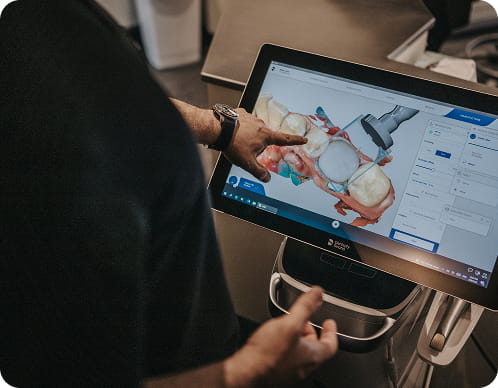
Dr Munro examines your mouth, reviews your health history, and takes a CBCT scan to assess your jawbone volume and plan the implant locations. You’ll get a written treatment plan and costs.
There’s no pressure to decide on the day. We’re happy to answer any questions you may have.
2. Implant Placement
Dr Munro places the four implants while you are sedated or numbed with local anaesthetic. You may feel pressure or movement, but you shouldn’t feel sharp pain. Some swelling, bruising and tenderness afterwards is normal, and your dentist will explain pain relief before you go home.
In suitable cases, a temporary fixed arch can be fitted soon after surgery, so you leave with fixed teeth rather than going back to dentures while you heal.
All surgery carries risk. It’s important to choose the right dentist for dental implants. If you’re anxious about dental procedures, ask about sedation at your consultation.
3. Osseointegration
Over roughly three to six months (depending on the individual), the implants fuse with the jawbone. You’ll come back for follow-up appointments during this time so your dentist can check healing.
You can read more about how osseointegration works and what recovery after implant surgery looks like.
4. Final Prosthesis
Once your dentist is satisfied the implants have integrated, your final arch is made and fitted. It’s shaped and shaded to suit your face and bite, and your dentist adjusts it where needed. You’ll be shown how to clean around it, and your dentist will advise on any aftercare or oral hygiene strategies you need.
Our guide to looking after All-On-4® implants covers your daily routine and maintenance tips.
Cost of All-On-4® Implants vs. Removable Dentures: What Patients Should Know
The initial cost of All-On-4® implants is significantly higher than conventional traditional dentures. Imaging, surgery, materials and any additional procedures influence the quotation.
However, your total can also depend on whether you need teeth extracted, your jawbone condition, and the materials you choose for your final arch. This is why we don’t quote a fixed All-On-4® price online. It wouldn’t be accurate for your situation. You’ll get a full written breakdown after your consultation and CBCT scan, before making any commitments.
Over the longer term, the picture is more nuanced. Dentures need periodic relining and eventually replacement as the bone underneath changes shape. All-On-4® also has ongoing costs. Reviews, cleaning and maintenance, and potential repair or replacement of the prosthesis over the years.
The bottom line? Neither dentures nor implants are automatically cheaper over a lifetime.
Private Health Cover For Dental Implants
Some private health extras policies may rebate part of the cost, depending on your fund and level of cover. Medicare usually doesn’t cover implant treatment for adults.
Our payment plans can help spread the cost, and in some circumstances you may be eligible to apply for early release of superannuation for dental treatment. If that’s an option for you, our team can walk you through the paperwork.
Book an All-On-4® Assessment at Dental 359 Subiaco
If you’re weighing up All-On-4® vs. removable dentures, you’re welcome to book a consultation with Dr Munro at our clinic on Rokeby Road, Subiaco.
There’s no pressure to decide on the day. If you’d just like to ask a question first, call Dental 359 on 1300 625 625 and we’ll help you work out whether a consultation makes sense.