


 Go Back
Before booking a consultation for a dental implant, it’s worth knowing whether you’re a suitable fit for the treatment. The good news is that most adults with healthy gums and a fully developed jawbone are candidates for dental implants in Australia.
And if you lack jawbone density, a skilled cosmetic dentist in Perth can often use a bone graft to rebuild it.
However, there is more to the question of “Am I a candidate for dental implants?” than just gum health and jawbone density.
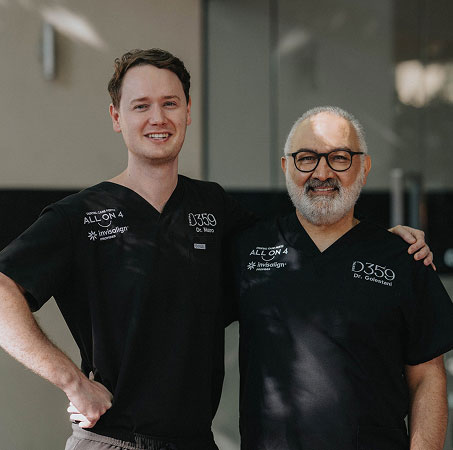
If you have booked or are thinking about booking a dental implant consultation with Dr Thomas Munro, Principal Dentist at Dentist 359, this guide will help you understand eligibility and what happens next.
Why Suitability Matters for Dental Implants
“Suitability” is a word you’ll see frequently when researching dental implant assessments and what to expect. Yet it’s rarely explained in clinical terms.
A dental implant is a small titanium post that is surgically placed in the jawbone. It acts as an artificial tooth root. Because it goes into the bone, whether it’s the right option for you depends on clinical factors specific to your mouth, your bone, and your general health.
No two assessments are the same. Two people missing the same tooth can have very different bone volume, gum health, and medical histories, and the treatment plan changes accordingly.
This is important, because online content about implant suitability can be misleading. Lists of ‘good candidate’ criteria can be helpful as general indicators, but they do not replace a clinical assessment.
The question “Am I a candidate for dental implants?” cannot be answered from a generic online checklist (or this article). The only way to determine suitability is with an examination by a qualified medical professional.
Did you know: Tooth loss is more common than many people realise. The latest AIHW data reveals that Australians aged 15-34 are missing 3.2 teeth on average, rising to 13 for people aged 75 and over.
Dental Implant Assessment: What to Expect at Dental 359
An implant assessment at Dental 359 is structured around two main questions:
- Are you a candidate for dental implants?
- If so, what does preparation and treatment look like for you?
During the consultation, your dentist works through your history, examines your mouth, takes a three-dimensional scan of your jaw, and then talks you through what it all means. This all takes around 60 minutes.
Medical and Dental History Review
Your consultation begins with a conversation about your health. This usually includes:
- Any medications and supplements you currently take
- Medical conditions and previous surgery
- Past dental treatment and tooth extractions
- Your smoking or vaping history
Each of these has a clinical purpose – though none decides the outcome on its own.
Some medications affect how you heal or how the bone behaves. Certain conditions, such as diabetes or osteoporosis, can influence bone metabolism and the way tissue recovers after surgery. Previous extractions matter too, because the timeline of tooth loss can affect the bone that’s left behind.
Your dentist will review your full history and weigh its relevance to your individual case before forming a judgement on whether you are a candidate for dental implants.
Bring a complete medication list, including the dose where possible. Do not stop prescribed medication before the assessment unless your treating doctor has advised you to do so.
Clinical Examination of the Mouth
Next comes a detailed examination of your teeth, gums, and the tissue surrounding the tooth to be replaced.
Gum health is especially important for implants. An implant needs healthy tissue around it to stay stable over the long term, so any active gum disease has to be addressed before implant placement can be considered.
If gum disease, decay, a cracked tooth or an unresolved infection is present, your dentist will explain whether treatment is needed first. These concerns do not necessarily rule out implants, but they may change the timeline.
CBCT Scanning and Imaging
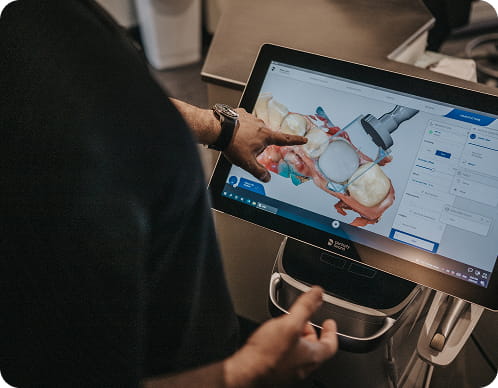
Dental 359 uses on-site cone beam computed tomography (CBCT) to create a three-dimensional image of your jawbone during dental implant assessments.
This is different to a standard two-dimensional dental X-ray. The CBCT scan provides the dentist with the information needed to assess bone volume precisely:
- Bone height
- Bone width
- Jawbone density
- Bone shape
- Relationship to nearby structures such as nerves or the sinus
The CBCT scan is quick and non-invasive. There are no needles. You stay still for a short time while the scanner passes around your head, and it’s done.
Assessing Bone Volume
Bone loss after a tooth extraction is one of the most common concerns raised during an implant consultation. This is because the bone that used to support a tooth gradually shrinks back after it is lost.
This is “resorption”, a normal biological process. The amount and rate vary between people. Generally, the longer a tooth has been missing, the more the bone changes.
The CBCT scan gives your dental care team the information needed to advise on whether the bone volume is sufficient, or whether additional procedures may be considered before implant placement.
Bone loss does not automatically rule you out of implants. Bone grafting may increase the amount of bone in the treatment area. Other implant approaches may sometimes be discussed for more complex tooth loss.
Overall Health Assessment
A successful dental implant in Perth depends on “osseointegration”, which means the implant gradually fuses with the jawbone. This is where your general health becomes important.
Anything that affects your body’s ability to heal can affect that process. Conditions and medications the dentist reviews include:
- Uncontrolled diabetes
- Bleeding disorders
- Medications that affect bone density (such as bisphosphonates)
- Medications that suppress the immune system
Smoking is reviewed here too. It reduces blood flow to the gums, slows healing, suppresses the immune system, and is associated with higher rates of implant complications and failure.
A 2024 review found that smoking was associated with significantly higher odds of early implant failure. Smoking is a factor the dentist will discuss with you; it doesn’t automatically mean you are not a candidate for dental implants.
The Conversation After the Assessment
After reviewing the examination and imaging, your dentist will explain what they found. This conversation may cover:
- Whether you are a candidate for dental implant treatment
- Any preparatory dental or medical steps
- The likely treatment stages and recovery periods
- Fees and available payment arrangements
- Limitations and risks
If you aren’t a good candidate, the dentist will explain why and walk you through alternative options.
There is more than one type of dental implant in Perth. A dental bridge, removable denture or All-On-4® implant may be appropriate depending on the number and location of missing teeth, as well as the health of the remaining teeth.
Factors That Commonly Come Up in Implant Assessments
When someone asks, “Am I a candidate for dental implants?”, the answer usually depends on several factors, including:
- Bone volume and density (assessed via the CBCT scan): Enough bone, in the right place, gives the implant a stable foundation.
- Gum health: If active periodontal disease is present, your dentist will advise on what treatment is required first.
- Age: Teens and young adults may not be candidates if their jaw is still developing; there is no fixed upper age limit so long as you are healthy.
- Medications: Some medications affect bone metabolism or healing, which is why the dentist asks to review your full medication and supplement list.
- Smoking and lifestyle: Patients who smoke are advised on how it affects outcomes and may be given specific guidance to improve the success rate of their treatment.
- Number and location of missing teeth: How many teeth are missing and from where shapes the treatment plan.
- Existing dental health: Any active decay or infection needs to be treated before implant placement.
This isn’t an exhaustive checklist. But it might help you understand dental implant assessments and what to expect.
Does Bone Grafting Affect Suitability?
Bone grafting is a procedure used to increase bone volume in the jaw where it has been lost. Your dentist may discuss it if the assessment shows there isn’t currently enough bone for an implant.
There are a few things worth knowing about bone grafting.
Not Every Patient Who Has Experienced Bone Loss Needs Grafting
The degree and location of the loss vary. In many cases, the bone that’s there is enough.
Grafting Is Usually a Separate Procedure
Where grafting is required, the timing will depend on the amount of bone available. Larger bone defects may require grafting as a separate procedure to prepare the site before implant placement, with time allowed for healing.
In cases where there is sufficient bone with only a small area of defect, grafting can often be performed at the same time as the implant is placed.
Zygomatic Implant Treatment
For severe upper-jaw bone loss, your dentist may consider zygomatic implants. These longer implants anchor into the cheekbone to support implant-retained prostheses.
Zygomatic implants are placed by an Oral and Maxillofacial Surgeon, with patients referred to a specialist for this procedure. Dr Thomas Munro will then restore the implants at Dental 359.
What Implant System Does Dental 359 Use?
Dental 359 uses Nobel Biocare implant systems, a globally recognised company with a long history of innovation in implant dentistry. Nobel Biocare’s heritage is closely linked to Professor Per-Ingvar Brånemark, whose discovery of osseointegration laid the foundation for modern dental implant treatment. The company that became Nobel Biocare developed from this pioneering work and has continued to play a major role in advancing implant dentistry worldwide.
Nobel Biocare has remained at the forefront of implant innovation, with developments including zygomatic implants, tapered implant designs, guided implant surgery and, in collaboration with Dr Paulo Maló, the original All-on-4® treatment concept for replacing a full arch of teeth using four implants.
At Dental 359, we choose Nobel Biocare because we take a non-compromising approach to quality. Their systems combine a strong clinical history with ongoing research and continued innovation, giving us confidence in the products and components we use when planning and restoring implant treatment for our patients.
Knowing which implant system your dentist uses is also important for ongoing care. The implant, connecting components and final restoration are designed to work together as a system. Using an established manufacturer such as Nobel Biocare also provides documented component information, helping support the maintenance, servicing and ongoing care of your implant restoration.
How to Prepare for Your Implant Assessment at Dental 359
A little preparation makes sure your appointment is productive, and you can make the most of your consultation time with your dentist.
Time-wise, set aside about 60 minutes. The exact time may vary if you need further imaging or discussion. If you are a new patient, we ask that you arrive 10–15 minutes early to fill out some paperwork.
What To Bring On the Day
Bring a list of your current medications and supplements, and any previous dental X-rays or records of dental work if you have them.
Private health fund details and your Medicare card are also good to have. Benefits and exclusions depend on your individual policy, and Medicare does not cover dental implants. Our reception team can discuss your specific cover and any applicable rebates with you.
You should also bring a list of questions to ask your dentist. Here are a few to get you started:
- What does my bone volume look like based on the scan?
- Is bone grafting something I’d need to consider?
- Am I a candidate for dental implants? Are there alternative treatments?
- What would the treatment timeline look like for my situation?
- Do I need to make any health or lifestyle changes before receiving the implant?
- What are the costs, and are payment plans available?
You do not need to understand every clinical detail before your consultation. We’ll take the time to explain everything and answer your questions during your appointment.
After Your Consultation
You may also want to ask how long you could be without a tooth, whether a temporary restoration is possible, and what recovery may involve. This helps you prepare for the days and weeks ahead.
Our article on what to expect after getting dental implants provides general information on the healing process. Your dentist will give you personalised advice after the consultation.
If your dentist recommends full-arch treatment, you can also read about maintaining All-On-4® implants. Maintenance requirements should form part of your decision.
Next Steps for Dental Implant Candidates
Losing a tooth is rarely a pleasant experience. We want to help you get the treatment you need as soon as possible.
If you’ve been wondering “Am I a candidate for dental implants?”, the best thing you can do is book an assessment at Dental 359. Dental 359 provides dental implant assessments and personalised treatment at our purpose-built Subiaco practice.
Our team of qualified dentists and assistants will scan and examine your mouth to determine whether implants are the right solution, and answer all your questions so you can make a fully informed decision. You can learn more about dental implants in Perth or contact our practice for detailed information.
To book a dental implant assessment with Dental 359 in Subiaco, call 1300 625 625 or click the booking button at the top of this page.