


 Go Back
Around 62% of Australians would like to do something about their crooked smiles. If you’re in that group, there’s a good chance that you already know that there are two main options to straighten teeth in Australia: Invisalign clear aligners and traditional braces.
But what is living with each one actually like? Can you eat normally? How does teeth cleaning work? And, most importantly, how do you know which one is best for your teeth?
This guide compares Invisalign vs traditional braces side by side, so you can understand the real differences before you book a consultation.
Dental 359 is a Platinum Provider of Invisalign
Dental 359 in Subiaco offers Invisalign. We don’t offer traditional braces, but if Dr Munro assesses your teeth and believes braces or specialist orthodontic treatment would be more appropriate, he’ll explain why and discuss an orthodontist referral.
So, this guide isn’t about which is “better”. That depends on your teeth and needs. It’s an honest look at the two treatments – the differences between them, and why those differences matter.
Invisalign vs Traditional Braces: How Each Treatment Works
Both Invisalign and traditional braces move teeth by applying controlled pressure over time. It’s how that pressure is applied that starts to change things.
The obvious difference is clear aligners vs braces, or “trays” vs “brackets and wires”. Underneath that, there’s some very interesting orthodontic science happening to correct crooked teeth.
How Invisalign Works
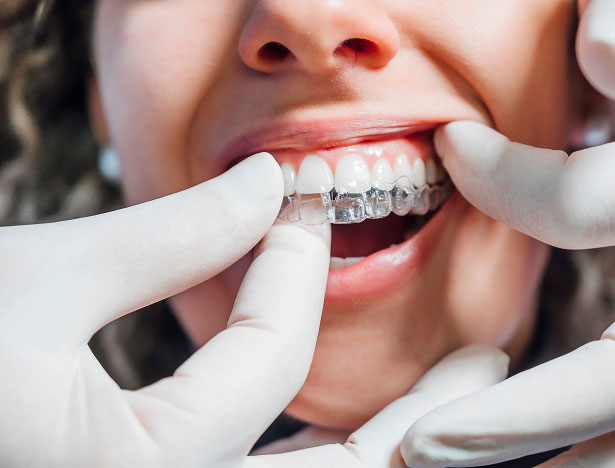
Invisalign uses a series of custom-made clear plastic aligners, worn over your teeth, to gradually adjust your bite.
Each aligner is slightly different from the one before and moves your teeth through one small stage of the treatment plan. You wear it for the prescribed period, usually one to two weeks, then move on to the next one.
The aligners need to stay in for around 20 to 22 hours a day. You take them out to eat, drink anything other than water, brush and floss.
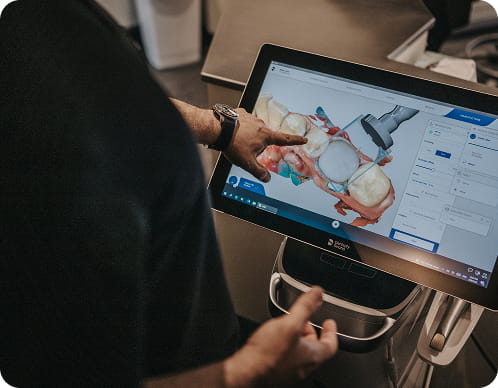
Treatment is planned digitally and adjusted throughout. At Dental 359, we take a 3D scan of your teeth with an iTero scanner instead of using uncomfortable putty impressions. We then use Invisalign’s ClinCheck software to model how your teeth may move.
Some patients also need small tooth-coloured bumps bonded to certain teeth. These are called “attachments”, and they help the aligners grip and move the teeth.
Invisalign is a brand of clear aligner made by Align Technology. Dental 359 is an Invisalign Platinum Provider.
How Traditional Braces Work
Traditional braces use small metal or ceramic brackets bonded to the front of the teeth. The brackets are connected by a thin wire, called an archwire, which applies continuous pressure to move the teeth over time.
Unlike Invisalign, braces are fixed in place for the length of treatment. You can’t remove them yourself.
Your orthodontist reviews the braces during treatment and adjusts the tension as needed, typically every four to eight weeks.
Because braces are fixed, there’s nothing for you to remember to put back in after lunch. They’re working around the clock until treatment is complete. You do, however, have to clean around them and take some care with what you eat.
Ceramic (tooth-coloured) brackets and “lingual” braces, which sit behind the teeth, are also available if you’d like braces to be less noticeable.
Invisalign vs Traditional Braces: Side-by-Side Comparison
If you’re weighing up clear aligners vs braces, these are the main differences that affect your lifestyle over the course of treatment. Individual circumstances vary, and your dentist will advise on suitability at consultation.
Factor |
Invisalign |
Traditional Braces |
Appearance |
Clear aligners that are largely invisible. Some patients have small tooth-coloured attachments | Metal or ceramic brackets connected by a wire. Ceramic brackets are less noticeable |
Removability |
Removed to eat, drink (other than water) and clean your teeth | Fixed for the length of treatment and removed by your orthodontist |
Cleaning |
Remove aligners to brush and floss as normal, and clean trays | Cleaning around brackets and wires, often with floss threaders or interdental brushes |
Eating restrictions |
None while aligners are out (brush before putting them back in) | Best to avoid hard, sticky and chewy foods |
Comfort |
Pressure for a day or two with each new set | Soreness after adjustments, and brackets can rub the cheeks and lips |
Appointment frequency |
Progress reviews every 6–10 weeks | Adjustments every 4–8 weeks |
Treatment duration* |
12–18 months for moderate cases | 18–24 months for moderate cases |
Suitable for |
Mild to moderate crowding, gaps and some bite issues | Mild to complex cases, including severe crowding and skeletal bite problems |
Patient compliance required |
High; aligners must be worn 20–22 hours a day | Lower; braces work continuously, although cleaning and elastics still need effort |
Cost |
Generally comparable for moderate cases | Generally comparable for moderate cases |
Available at Dental 359 |
Yes, Dental 359 is an Invisalign Platinum Provider | No, where braces are better for you, Dr Tom will discuss a referral at consultation |
*Treatment duration varies significantly between individuals. Complex cases may take longer, and averages partly reflect that aligners are often used for milder cases. Your dentist will discuss your expected timeline.
What Invisalign Does Well
Is Invisalign better than braces? In some areas, it has clear advantages. But in the interests of fairness, we’ll outline the honest case for clear aligners vs braces so you have all the information.
Less Visible During Treatment
Invisalign clear aligners are largely invisible. Many patients find this easier in work, school and social settings.
Attachments can make aligners a little more noticeable up close – though still less visible than metal braces.
Easier Cleaning
You brush and floss your teeth as normal throughout Invisalign treatment.
With fixed braces, cleaning around brackets and under the wire takes more time and extra tools such as floss threaders or interdental brushes.
However, you’ll need to brush before putting your clear aligners back in, or food can get trapped. You also need to clean the trays at least a couple of times per week.
No Brackets or Wires
Invisalign aligners have no brackets or wires to rub against your cheeks and lips.
Your teeth may feel tight or tender for a day or two when you start a new set of aligners. Most people describe this as pressure rather than pain, and it usually settles as the teeth adjust.
Effective for Mild to Moderate Cases
Invisalign is proven effective for mild to moderate alignment issues, including crowding, gaps and some bite problems.
A 2022 study compared simple cases treated with either Invisalign or traditional braces. The results were similar in both groups at the end of treatment, and again six months later.
Your dentist will decide whether your case is within Invisalign’s clinical scope after examining your teeth and bite.
What Traditional Braces Do Well
Modern braces have been used for decades (and earlier predecessors for millennia) for a reason.
For some patients, braces are the more appropriate treatment even when Invisalign is their preferred option.
Any fair comparison of Invisalign vs traditional braces needs to cover what braces do well.
Suitable for More Complex Cases
Braces can treat a wider range of orthodontic problems than aligners, including significant crowding and skeletal discrepancies, where the upper and lower jaws don’t line up properly.
Fixed brackets give the orthodontist precise control over how each tooth moves. That can make traditional braces the clinically appropriate treatment in more complex cases.
Continuous Treatment
Braces work around the clock, so you don’t need to remember to wear them. There is no question of leaving them at home after breakfast. It can also help younger patients, who may find 20–22 hours of daily wear hard to maintain.
Treatment time is another factor to consider when asking “is Invisalign better than braces?” In the same 2022 trial we mentioned earlier, braces patients finished treatment around 4.8 months sooner on average than aligner patients with similar simple cases.
The researchers suggested aligner wear time and extra rounds of aligners may have contributed.
Decades of Clinical Evidence
Clear aligner treatment has developed rapidly since it was introduced, but traditional braces had a 2,000-plus-year head start.
Braces are also still widely used in specialist orthodontic practice in Australia. A 2022 survey of Australian Society of Orthodontists members found that 93% of orthodontists offered clear aligners, but aligners only made up 24% of their annual caseload.
Lower Cost in Some Cases
For complex orthodontic cases, traditional braces may be the lower-cost option. This varies depending on the case and the provider.
What Invisalign Cannot Treat
Invisalign has treated 20+ million people in 90+ countries, but it isn’t suitable for every orthodontic problem. Knowing its limits is important when weighing up Invisalign vs traditional braces.
Cases that typically need traditional braces or other fixed appliances include:
- Severe crowding or spacing beyond the scope of aligners
- Complex bite issues, including those needing skeletal correction
- Tooth rotations or vertical movements
- Some cases involving tooth extractions
If you have crowns, bridges or other dental restorations, your suitability for aligners may also be assessed differently.
Aligner treatment also commonly involves “refinements”. These are extra aligners made from a new scan to fine-tune the final position of your teeth.
Invisalign vs Braces: Which Is Better for Adults?
Many adults comparing clear aligners vs braces look at Invisalign first. Removable clear aligners tend to fit more easily around work and social commitments.
Invisalign is clinically effective and widely used for mild to moderate cases in adult patients. However, traditional braces may still be better for an adult with a complex bite issue.
And don’t forget that Invisalign needs to be worn for 20–22 hours a day. You only remove them to eat or drink anything other than water and must brush and floss before putting them back in.
Patients who understand this commitment and are motivated to keep it up are generally good candidates from a compliance perspective. If you tend to snack throughout the day or think consistent wear might be difficult, let your dentist know at your consultation.
The bottom line is that “better for adults” isn’t a universal rule. Dr Thomas Munro or your treating dentist needs to examine your teeth and bite.
Invisalign vs Braces: What About Cost?
The cost of Invisalign vs traditional braces depends on several personal factors, including:
- Case complexity
- Treatment duration
- Your provider
- Your location
The ballpark price range for moderate cases is similar around Australia, but it’s impossible to say for sure whether one will be cheaper in your case.
That’s why we don’t quote Invisalign prices online at Dental 359. Whatever figure we advertise wouldn’t be accurate for your situation. Instead, we give you a detailed cost breakdown after assessing your teeth and taking scans.
Does Private Health Cover Invisalign or Braces?
Private health fund extras cover may offer rebates for some orthodontic treatment. How much you can claim depends on your policy, level of cover, limits and waiting periods. Check with your health fund before your consultation.
We can process your claim at your consultation, so you know what kind of rebate to expect before committing to treatment. We also offer payment plans to help spread the cost of treatment.
Invisalign at Dental 359 Subiaco: What to Expect at a Consultation
At an Invisalign consultation at Dental 359, you’ll see our clinical team for scans and X-rays. Dr Thomas Munro will then assess your teeth and bite, and talk with you about your concerns and goals.
He’ll advise whether Invisalign is appropriate for your case. If it is, he’ll outline your treatment plan – including the estimated duration and cost – before you decide whether to go ahead.
Where traditional braces or another approach would better suit your needs, Dr Tom will explain this at the consultation and discuss the next steps.
Oral Health and Complementary Treatments
Your teeth and gums need to be healthy before orthodontic treatment starts. Any decay or gum problems may need treatment first. If it’s been a while since your last visit, our guide to what happens at a dental check-up explains what to expect.
Some patients also consider cosmetic treatment such as dental veneers (or composite bonding) and teeth whitening after their teeth are straight. Dr Tom and the Dental 359 team can guide you through a personalised treatment plan that moves at your speed.
Book an Invisalign Consultation at Dental 359 Subiaco
If you’re weighing up Invisalign vs traditional braces, a consultation with a qualified dentist is a good next step. Your dentist can assess your teeth and bite, compare all treatment options, and provide advice on the best solution for your smile.
Call Dental 359 in Subiaco on 1300 625 625 or book an appointment online at a time that suits you.