



 Go Back
When you lose one or more teeth, we will firstly need to replace the tooth roots with dental implants. Made from titanium, the implants behave like natural roots by fusing with your jawbone,creating a strong foundation to attach the artificial teeth, or ‘crowns’. There is usually a period of healing lasting from six weeks to six months. The upper jaw usually takes a little longer, due to softer bone. The bone in the lower jaw can be denser, which speeds up the process.
Stages of the Treatment
For some patients, dental implant surgery begins with removing the damaged tooth. This is a common dental procedure but can take a few weeks to recover from before moving forward with treatment. It is imperative to follow your post-extraction instructions carefully to prevent complications like dry socket or infection.
For others, treatment might begin with bone grafting or bone regeneration procedures to strengthen the jawbone. A strong, stable bone in the area of the implant is necessary to support the force of biting and chewing with the eventual replacement tooth. These procedures rely on bone healing, so can take six to eight weeks for full recovery.
Once you’re ready for implant placement, the longest part of the process begins. Dr Golestani will make a small cut in your gums to reach the jawbone, then drill a hole and place a titanium implant in it, to stand in for the missing tooth roots. This is done under local an aesthetic. Whilst this does not affect your ability to drive, you should always clear your schedule on the day of this treatment.We ask our patients to rest for the remainder of the day.
The recovery time from implant placement can take several months. As the process of bone healing continues, the implant will fuse with the healing bone around it and essentially become part of your jaw. Titanium is used specifically because of its ability to permanently bond with bonet issue. This means much less noise and slippage compared to dentures, and also improves the stability and lifetime of the restoration compared to fixed bridges.
If your missing tooth is at the front of your mouth, you may have a temporary replacement fitted during this healing process — a kind of partial temporary denture that can be removed for cleaning and at night.
The Abutment and Final Crown
After the dental implant has fully healed, there is often one more surgical step: placing a small attachment called an abutment or collar on the top of the implant. This provides a base for the crown or replacement tooth. Dr Golestani will arrange review appointments during this time to keepa close eye on the implant site and healing progress.
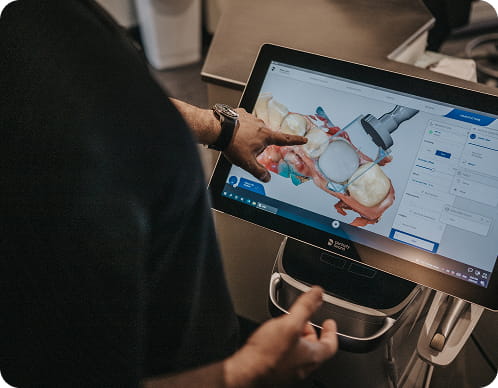
After your gums have healed around the abutment (approximately two weeks), impressions will betaken for the creation of your custom crown. At your final appointment, the new crown is attached to the abutment and adjusted for fit and bite. The result is a strong, natural-looking tooth that functions exactly like the original.
Side Effects and Recovery
As with any dental surgery, you may experience some discomfort during healing. Side effects that are normal and expected include: swelling around the gums and face, slight bruising, pain at the implant site, and minor bleeding. It is usually recommended to avoid hard foods during healing, and Dr Golestani may prescribe pain medication or antibiotics after surgery to help you heal.
If at any time during the healing period you find that these issues get worse or are causing significant pain, get in touch with our practice right away.
Improving Your Chances of Success
There are things you can do to increase the success rate of dental implants. The failure rate is very low overall, but there is a significant correlation between smoking and tobacco use and dental implant failure. If you smoke, we strongly recommend quitting before having this procedure for the best chance at a successful outcome.
With good oral hygiene, regular check-up appointments at Dental 359, and a commitment to caring for your new tooth, dental implants can last a lifetime.